
The Importance of Regular Truck Maintenance in Oregon
- Michael Rizk
- Dec 22, 2025
- 4 min read
Updated: Jan 9
You rely on your truck every day to get the job done. When your vehicle is well-maintained, it runs more efficiently and lasts longer. Neglecting maintenance can lead to unexpected breakdowns, lost work hours, and expensive repairs. For example, a simple oil change can prevent engine wear, while checking tire pressure regularly improves fuel economy and safety.
By scheduling routine inspections and servicing, you catch small issues before they become big problems. This proactive approach saves you money and keeps your truck ready for any job. Plus, well-maintained trucks hold their value better if you decide to sell or trade them later.

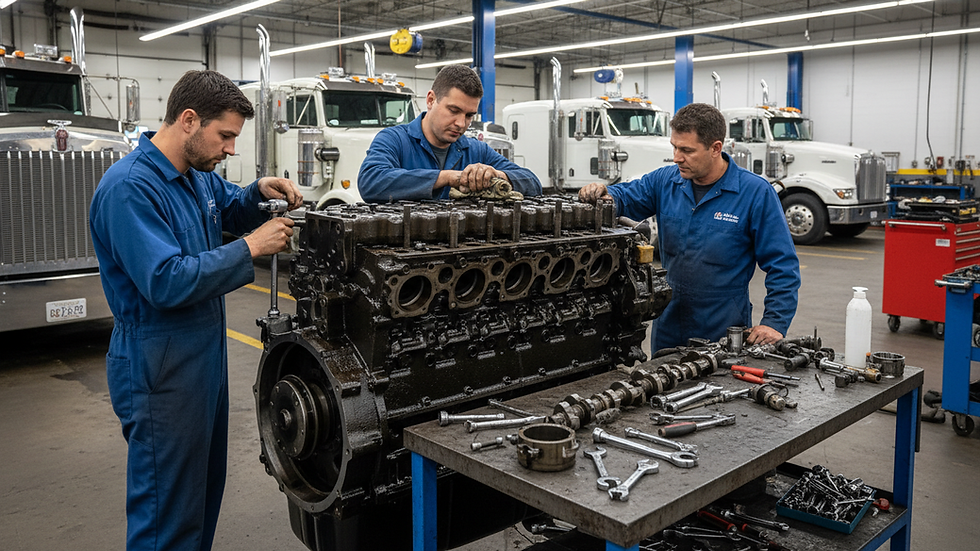
Routine diesel truck engine inspection helps prevent costly breakdowns.
How to Implement a Regular Truck Maintenance Schedule
Creating a maintenance schedule tailored to your truck’s needs is easier than you might think. Start by consulting your owner’s manual for manufacturer recommendations. Then, set reminders for key tasks such as:
Oil and filter changes every 5,000 to 7,500 miles
Tire rotation and pressure checks monthly
Brake inspections every 10,000 miles
Fluid level checks (coolant, transmission, brake fluid) monthly
Battery testing twice a year
Use a maintenance log to track completed tasks and upcoming services. This record helps you stay organized and provides proof of care if you ever need warranty support or resale documentation.
If you operate multiple trucks or heavy equipment, consider using fleet management software. These tools automate reminders and help you schedule service appointments efficiently.

Mechanic checking truck tire pressure to ensure safety and fuel efficiency.
What is the 30 60 90 Rule for Car Maintenance?
The 30 60 90 rule is a simple guideline to help you keep your vehicle in good shape by performing specific maintenance tasks at 30, 60, and 90-day intervals. While originally designed for cars, this rule can be adapted for trucks and heavy equipment.
30 Days: Check tire pressure, fluid levels, and lights. Inspect for any visible damage or leaks.
60 Days: Perform a more thorough inspection including brake checks, battery condition, and air filter status.
90 Days: Change oil and filters, rotate tires, and inspect belts and hoses.
Following this rule helps you catch issues early and maintain consistent care without overwhelming your schedule. Adjust the intervals based on your truck’s usage and operating conditions.
Practical Tips for Maintaining Diesel-Powered Trucks in Oregon
Operating in Oregon means dealing with diverse weather and terrain. Here are some practical tips to keep your diesel truck running smoothly:
Monitor Diesel Exhaust Fluid (DEF): Oregon’s emissions standards require proper DEF levels. Check and refill regularly to avoid engine derate or shutdown.
Protect Against Rust: Rain and snow can cause corrosion. Wash your truck frequently, especially the undercarriage, and apply rust inhibitors if needed.
Use Quality Fuel: Fill up at reputable stations to avoid contaminants that can clog fuel filters and damage injectors.
Inspect Tires for Wear: Oregon’s varied roads can wear tires unevenly. Rotate and replace tires as needed to maintain traction and safety.
Plan for Seasonal Changes: Prepare your truck for winter by checking antifreeze levels, battery health, and heater function.
By following these tips, you reduce downtime and extend your truck’s lifespan, no matter the season.
How Regular Maintenance Saves You Money and Time
Investing time and money in regular upkeep pays off in several ways:
Avoid Costly Repairs: Small fixes like replacing worn brake pads prevent expensive damage to rotors or calipers.
Improve Fuel Efficiency: Clean filters and properly inflated tires reduce fuel consumption, saving you money at the pump.
Increase Resale Value: A well-documented maintenance history boosts your truck’s resale price.
Enhance Safety: Reliable brakes, lights, and tires protect you and others on the road.
Reduce Downtime: Scheduled maintenance minimizes unexpected breakdowns that disrupt your work schedule.
For example, a trucking company in central Oregon reported a 20% reduction in repair costs after implementing a strict maintenance routine. This allowed them to complete more jobs on time and increase profits.
If you want to learn more about how to keep your fleet in top condition, check out this truck maintenance resource for detailed guides and tips.
Taking the Next Step Toward Better Truck Care
Now that you understand the benefits of regular truck maintenance, it’s time to take action. Start by setting up a maintenance calendar and sticking to it. Train your drivers or operators to perform daily checks and report any issues immediately. Partner with a trusted local mechanic who understands diesel engines and Oregon’s unique conditions.
Remember, consistent care keeps your truck reliable, safe, and efficient. It’s a small effort that leads to big rewards in the long run. Your truck is a valuable asset - treat it well, and it will serve you well.
Conclusion
By following these guidelines, you ensure your diesel-powered truck or heavy equipment stays in peak condition, ready to tackle any job within central Oregon and beyond. Regular maintenance is not just a task; it’s an investment in your business’s future. Prioritize it, and you’ll reap the benefits for years to come.


Comments