
The Importance of Preventive Maintenance and Oil Analysis for Heavy Trucks
- Michael Rizk
- Jan 16
- 3 min read
Updated: Feb 9
Why Preventive Maintenance Service Matters for Heavy Trucks
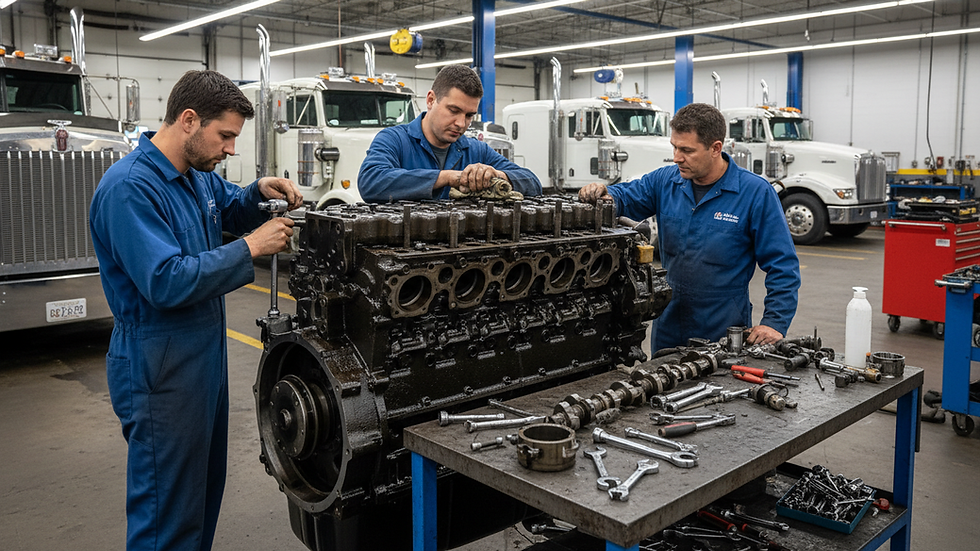
Preventive maintenance service involves scheduled inspections and servicing designed to catch potential problems before they cause breakdowns. For heavy trucks, this means regularly checking and replacing parts such as filters, belts, brakes, and fluids. The goal is to maintain the truck’s performance and safety while minimizing unexpected repairs.
Key Benefits of PM Service
Reduced downtime: Scheduled maintenance helps avoid sudden failures that can take trucks off the road for days.
Lower repair costs: Fixing small issues early prevents expensive damage to major components.
Improved fuel efficiency: Well-maintained engines and systems run more efficiently, saving fuel.
Enhanced safety: Regular checks ensure brakes, tires, and other safety-critical parts function properly.
Extended vehicle lifespan: Consistent care slows wear and tear, keeping trucks operational longer.
For example, replacing air and fuel filters during PM service prevents contaminants from damaging the engine. This simple step can save thousands in engine repairs and improve fuel economy by up to 5%.
The Role of Regular Oil Sample Analysis
Oil sample analysis is a diagnostic tool that involves testing engine oil for contaminants, wear metals, and chemical properties. By analyzing oil samples regularly, fleet managers and mechanics gain insight into the engine’s internal condition without disassembling it.
What Oil Sample Analysis Reveals
Wear and tear: Elevated levels of metals like iron, copper, or aluminum indicate parts wearing down.
Contamination: Presence of water, fuel, or dirt in oil signals leaks or other issues.
Oil degradation: Changes in viscosity or chemical composition show when oil loses effectiveness.
Engine health trends: Tracking oil condition over time helps predict failures before they happen.
For instance, detecting high levels of silicon in oil samples can point to dirt entering the engine, which may mean a faulty air filter or seal. Addressing this early prevents abrasive damage to cylinders and pistons.
How PM Service and Oil Analysis Work Together
While PM service focuses on scheduled inspections and replacements, oil sample analysis provides real-time data on engine health. Combining both creates a comprehensive maintenance strategy:
PM service addresses known wear items and routine replacements.
Oil analysis detects hidden problems and abnormal wear patterns.
Together, they allow targeted repairs and adjustments, avoiding unnecessary part changes.
This approach saves money by focusing resources where they are most needed.
For example, a fleet that uses oil analysis might discover early bearing wear in one truck. The maintenance team can then schedule a bearing replacement during the next PM service, preventing a costly breakdown.
Practical Steps to Implement Effective Maintenance
To maximize the benefits of PM service and oil sample analysis, fleets should follow these best practices:
Develop a Maintenance Schedule
Set intervals based on manufacturer recommendations and truck usage.
Include inspections for brakes, tires, filters, fluids, and belts.
Schedule oil sampling at regular mileage or time intervals.
Train Staff and Mechanics
Ensure technicians understand how to collect oil samples properly.
Train on interpreting oil analysis reports.
Emphasize the importance of thorough PM inspections.
Use Reliable Testing Services
Partner with certified oil analysis labs.
Choose tests that cover wear metals, contaminants, and oil properties.
Review reports promptly and act on findings.
Track Maintenance Data
Keep detailed records of PM service and oil analysis results.
Use data to identify recurring issues or trends.
Adjust maintenance plans based on real-world performance.
Real-World Example: Fleet Success Story
A regional trucking company managing 50 heavy trucks implemented a combined PM and oil analysis program. Over 12 months, they saw:
A 20% reduction in unscheduled breakdowns.
Fuel savings of approximately 4% due to better engine performance.
Extended engine oil change intervals by 15%, reducing oil costs.
Early detection of transmission wear, allowing planned repairs.
This proactive approach improved uptime and lowered overall maintenance expenses, demonstrating the value of integrating these practices.
Common Challenges and How to Overcome Them
Challenge: Skipping Oil Sampling Due to Cost Concerns
Oil analysis is an investment that pays off by preventing expensive repairs. Educate decision-makers on the long-term savings and improved reliability.
Challenge: Inconsistent PM Service
Create clear maintenance policies and use digital reminders or fleet management software to ensure timely service.
Challenge: Misinterpreting Oil Analysis Results
Work with experienced labs that provide clear, actionable reports. Consider training sessions for maintenance teams.
Conclusion: Invest in Your Heavy Trucks
In conclusion, investing in preventive maintenance and regular oil sample analysis is crucial for the longevity and efficiency of your heavy trucks. By adopting these practices, you can significantly reduce downtime and repair costs while enhancing safety and performance. Remember, a well-maintained truck is not just a vehicle; it’s a vital asset to your business.
For more information on how to implement these strategies effectively, consider reaching out to professionals who specialize in heavy truck maintenance. They can provide tailored advice to suit your specific needs.


Comments